Commercial AC systems are easy to take for granted. Once installed and running, they tend not to attract much attention unless something stops working or a change needs to be made.
Because of this, knowledge about the system itself often fades over time. Records may be misplaced, changes aren’t always documented, and it becomes more difficult to piece together how the system is set up or meant to operate.
When clear information isn’t available, managing a commercial AC system becomes more difficult than it needs to be.

A commercial AC system is a long-term asset. It supports comfort, energy efficiency, compliance, and day-to-day operation. Managing it properly depends on having clear information about how the system is set up and how it is meant to run.
When that information isn’t available, decision-making becomes reactive. In some cases, work is delayed because the implications aren’t clear. In others, action is taken quickly without enough context to make the best choice.
This often leads to:
Good record keeping helps prevent this by providing the context needed to understand issues and assess options properly.
It also plays an important role in meeting legal responsibilities.
Many commercial AC systems fall under F-gas regulations, which require specific information to be recorded and kept up to date. Without clear system records, it can be difficult to demonstrate compliance, understand refrigerant history, or respond properly if issues arise.
You don’t need deep technical knowledge to manage a commercial AC system effectively.
However, there are some key areas of information that should be accessible and broadly understood by those responsible for the building.
It should be clear what AC equipment is installed and where it’s located within the building.
This includes:
Without this basic information, faults take longer to diagnose and changes can have unintended knock-on effects elsewhere in the building.
Knowing the age of your AC system helps put performance and reliability into context.
Useful information includes:
Age alone doesn’t determine condition, but it does influence risk. A newer system behaving poorly raises different questions to an older system approaching the end of its working life.
Many buildings experience AC issues because the original design intent is no longer known.
Important design information includes:
Buildings change over time. When usage no longer matches the original design assumptions, the system may appear to be underperforming when it is actually operating as intended.
There is often a gap between how a system was designed to run and how it actually operates day to day.
Key operational details include:
Understanding this helps identify inefficiencies, unnecessary run hours, or conflicting settings that can increase energy use and wear without improving comfort.
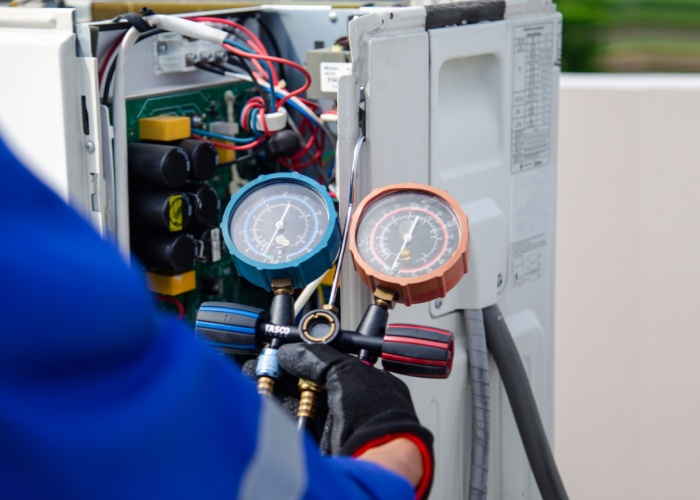
Most buildings have maintenance arrangements in place, but the detail is not always clear.
It is useful to understand:
This helps separate routine servicing from emerging issues that may need longer-term planning.
Every commercial AC system has limitations, whether due to design, building layout, or historical changes.
Examples include:
Recording these openly avoids unrealistic expectations and supports more productive conversations about risk, improvement, or future investment.
For many commercial AC systems, F-gas compliance is a legal requirement rather than a best practice.
Where applicable, it’s important to have clear records covering:
These records are required to demonstrate compliance and must be kept up to date. They also provide valuable technical context, particularly when systems are modified, repaired, or assessed for replacement.
Commercial AC systems evolve over time. Equipment is replaced, controls are adjusted, and building use changes.
Practical steps to maintain clear records include:
This doesn’t need to be complex. Even straightforward documentation can make a significant difference to confidence and control.
Knowing your commercial AC system isn’t about technical expertise. It’s about having enough information to manage it sensibly, operate it effectively, and care for it over time.
Clear records support better planning, reduce uncertainty, and help ensure decisions are made with the full picture in mind rather than in response to isolated problems.
At Loughborough Air Conditioning, we work with organisations at every stage of a system’s life, from installation and maintenance through to modification and replacement. This gives us a practical understanding of how systems change over time and what information matters in day-to-day operation.
Our role is to help clients keep control of their systems as they evolve, providing consistent support and straightforward advice. This allows more effective management, with fewer surprises and less reactive work.